Pages

Sunday, September 9, 2018

Fifth Port of Call: Stockholm, Sweden (Part 4)

Back in the Gamla Stan section of Stockholm we went to Storkyam, informally known as Stockholm's Cathedral as well as Stockholm's Church with the Dragon in it. It's official name is Sankt Nikolai kyrka (St. Nicholas Church). 

In front of the church is the strangest public toilet we've ever seen.

Behind the church was this odd booth. I wish I knew the story behind it.


Inside the church is the famous statue of St. George slaying the dragon (yes, poor dragon). The wooden statue contains the relics of St. George and six other saints. Consecrated in 1306 it is Stockholm's oldest building.

While in this Lutheran Church I lit a candle for candle as she moved into hospice care.


We walked around some more, including exploring the pedestrian shopping area, and took the train back to the boat. It was a real win to find out the train was part of the all day metro pass. We saw others doing the same thing. 

The weather was picture perfect, so I'll end the post on Stockholm with some pictures. 


Follow the blue line from the Nynahamn train station to the boat

Back to the dock 
This was our last port of call. The next day we spent on the boat. We were very fortunate to have lovely weather every day. There were a couple of times we wore a fleece, and had a few drops of rain, but over all it was in the 70s and pleasant.

Saturday, September 8, 2018

Fifth Port of Call: Stockholm, Sweden (Part 3)

Having volunteered at Rockingham, and visited many historic sites, I was super excited when I read Stockholm is home to the very first open air museum in the world. Lonely Planet listed the site as a must-do. 

Called Skansen it opened in 1891. To put it in context, Williamsburg became a National Historic District in 1961, but had been undergoing restoration since the 1920s. Old Sturbridge Village opened in 1946. Upper Canada Village opened in 1961.


Skansen covers 500 years of Swedish history. Buildings were moved here to create a village. They also have a petting zoo and aquarium, plus restaurants and shops. I was disappointed more historic buildings were not open, but the places where we could pay extra (such as gift shops) were open. I shouldn't complain as the admission price was only about $20 each.

Historic villages have learned lessons since Skansen opened. The buildings we did enter only had one way in, and the same way out, which even on a quiet day created log jams. 


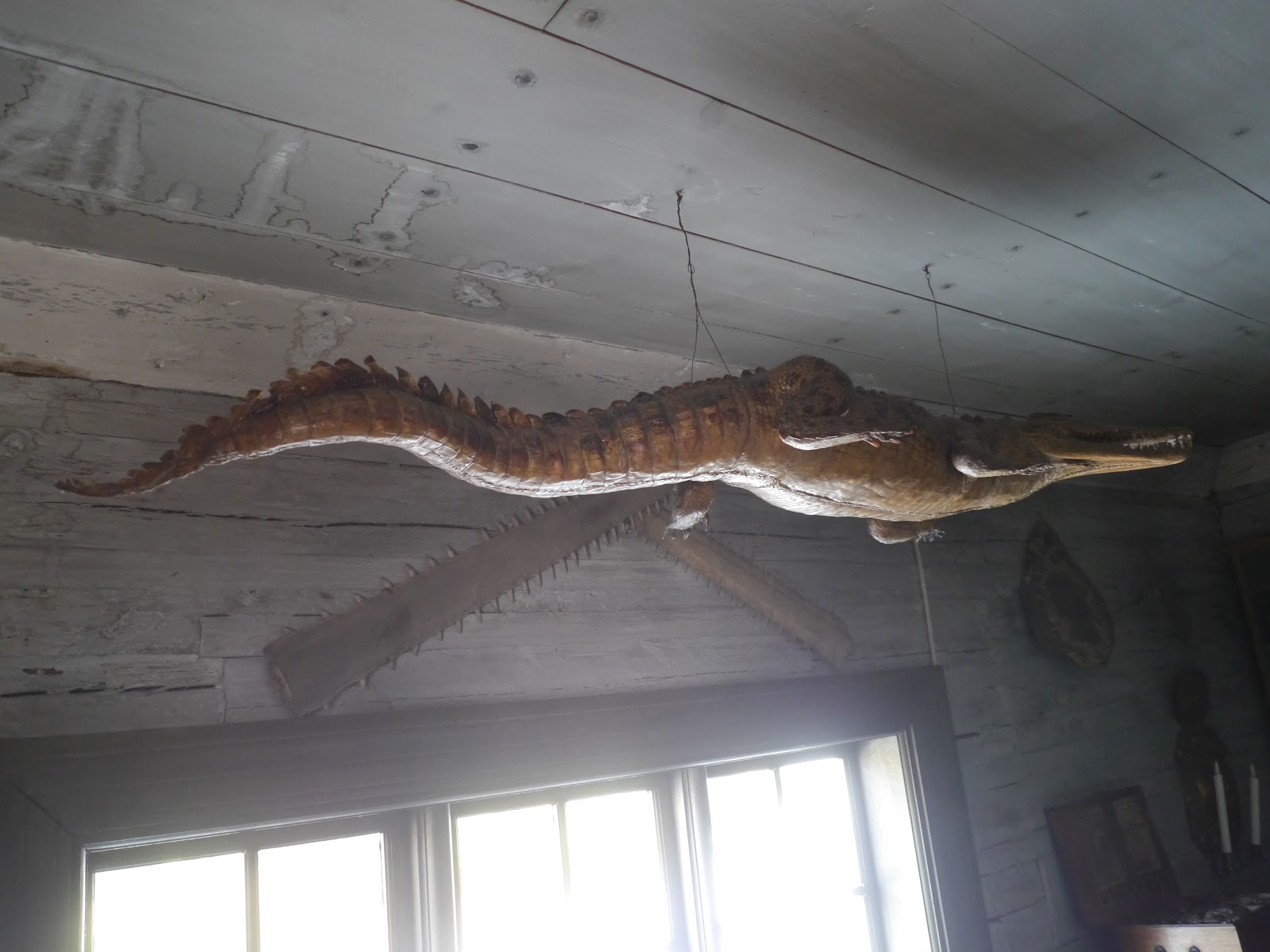
I did learn a little bit, but wanted to learn more. Inside the front window of the apothecary is a dead crocodile. It is meant to attract customers. Modern day pharmacists say it is the only thing in the shop that still works. Certainly caught my attention.


I also learned the walls inside farmhouses were painted by traveling artists, a job Ashley wished still existed. Some of the paintings were on linen, but most went straight on the walls.


This 18th farmer must have been wealthy. After all, he has two grandfather clocks in his home. I suspect it has more to do with collection development than with wealth, after all who would keep two grandfather clocks in upstairs bedrooms?

View of Stockholm from Skansen


From here we took the tram to the boat. We were "carded" on the tram, which always makes me happy I bought the all day transit card. We took the boat back to the Old Village (Gamla Stan).


Fifth Port of Call: Stockholm, Sweden (Part 2)

Us on the commuter boat to the island with Vasa
When I asked people what to see in Stockholm, the overwhelming response was Vasa

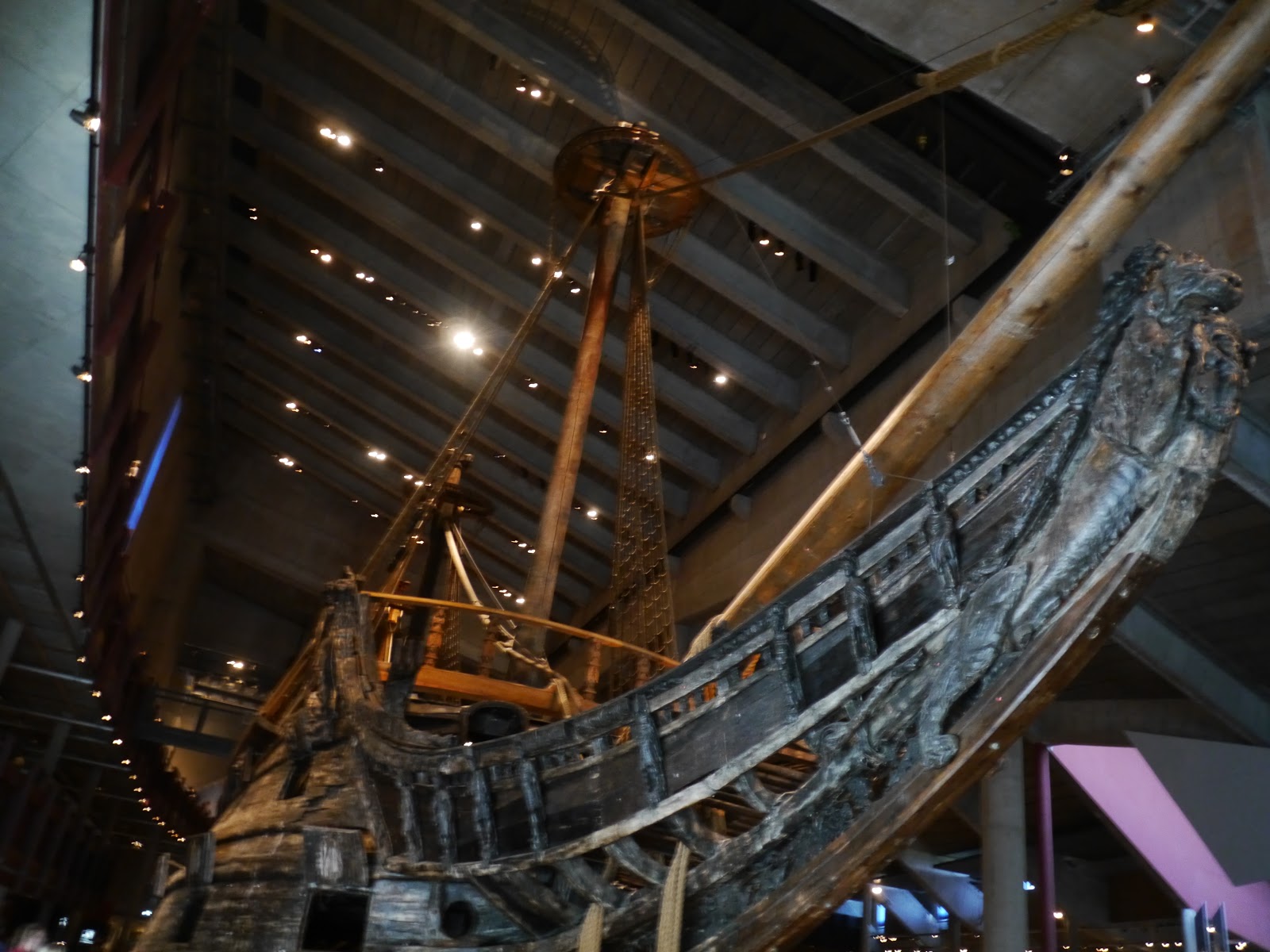
Vasa is a 17th century royal warship that set sail on August 10, 1628, and sank a couple of hours later along with 400 workers and family members only 200 meters into their trip. Thirty men and women drowned (trapped under cannons, they later figured out), the rest made it to shore. It took over 300 years for the boat to be found and brought back up to land to study even though they were only 1000 meters (3,300 feet) into their maiden voyage.


Timing was on our side. We showed up a couple of minutes before the film started in English, which then ended a couple of minutes before the guided tour (also in English) began. Sometimes things can go right.

With 64 guns, the Vasa was a heavily armed warship -- the best of its day. So why did it fail? The design was poor. It keeled too far allowing water to come in on the port side. It was too tall and not wide enough.

A month later a Council of State convened to lay the blame on someone, but they couldn't figure out who. Over the years they tried to find the boat and raise it, but it took until 1956 for a wreck expert to pinpoint exactly where it was, under 30 meters of water (about 100 feet). 

Over the centuries other ships sank in the same general area. They identified this was the ship they were searching for when they found the royal arms on a cannon. 

Three years later everything was ready to try to lift it. First they had to plug in holes and patch the ship to make it safe to lift and float again.

On May 24, 1961 they made international news by lifting the ship in front of television audiences globally. I can only imagine how big a deal it would be now in the era of social media.

Pumps drained the water to lighten the load. Archaeologists moved in to study this time capsule. Eventually they glided it to dock.

When the boat sank Gustov Adolf II was king. 

When the boat was raised Gustov Adolf XI was king.

The boat is four stories high. It could fit 450 crew members and soldiers. It weighed 900 tons. Seventeenth century attempts to raise it failed due to technological issues.

For 17 years after it was lifted it was sprayed with polyurethane to replace the water in the woods.  Four kilometers of roping was adding to re-rig the boat.

It is an archaeological treasure. The brackish water preserved the clothing, shoes, hair, and brains of the dead. They found 15 skeletons and could determine what they ate and any illnesses they had. No other ship of this age and site has been found so well preserved. The boat was not attacked by ship eating worms, nor had it suffered any battle damage.

The Vasa was designed to strike fear into the enemy upon site. 
View inside the boat

Alex, our tour guide, took us around the enormous boat, pointing out the ornate carvings and other features.


Replica of the boat
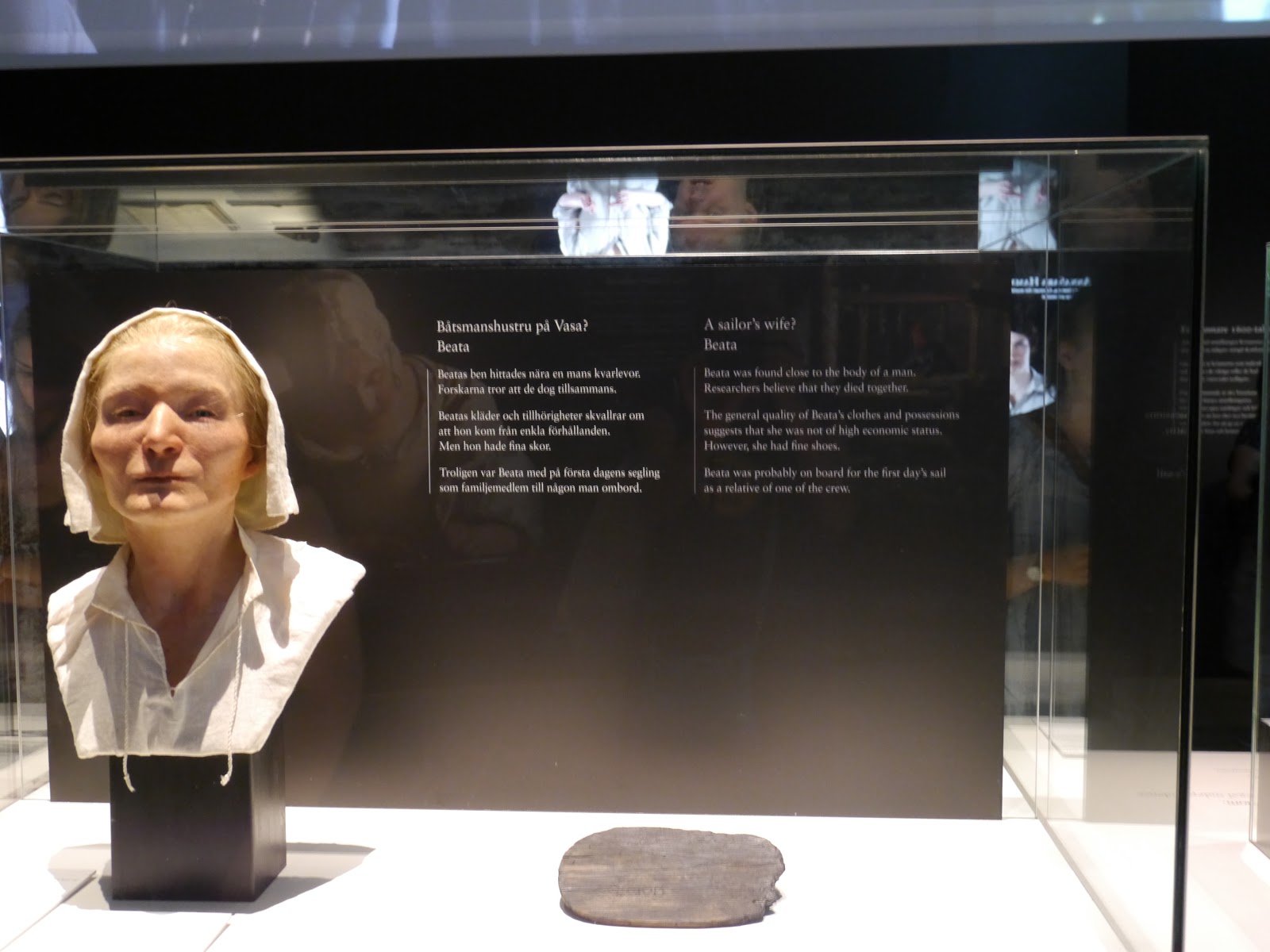
There was an exhibit about the women on board, which I found disappointing. There are only so many ways to say the wives of some of the sailors were on board.

After leaving Vasa we walked to our next destination: Skansen. 


Fifth Port of Call: Stockholm, Sweden (Part 1)

In an earlier post I gave the spoiler alert that Stockholm was our favorite port of call. 

It started out rocky. Early in the cruise we were told we were not actually dock in Stockholm, but in Nyashamn instead. But, because we booked when we were supposed to dock in Stockholm, we would be given a free shuttle bus to Stockholm. Book now, first come gets first choice of times. 

Ugh. 

So our 12 hour docking in Stockholm was cut short by an hour-long bus ride each way PLUS they were only providing transportation so we could spend about five and a half hours IN Stockholm.

The real bummer was I did no research about our trip until the weekend before we left. I could not wrap my head around actually going to the Baltic Sea. My focus had been on job hunting, which was getting me nowhere. 

When I finally did start planning, I fell in love with about twelve hours worth of things to do in Stockholm and I didn't want to cut that list in half. 

Don and I even discussed skipping going to shore and saving Stockholm for another trip, one where we could explore it fully. This year has taught me you don't know if you'll be given another chance so we should grab this one. 

I'm glad we did.

The 7 AM bus left at 7:20, but the hour-long bus ride was only 45 minutes long, so it evened out. We learned the port was a subway ride away from downtown, so we could use our all day metro card to get back to the boat later than we would have on the bus. It gave us flexibility.

We hit the ground running as soon as the bus stopped in Stockholm. Unfortunately it was too early to do the two things I deemed the highest priorities: going to Vasa and Skensen. The boat we would take did not start running until 9 AM, about the time the ticket booth opened. 

Plan B (or is it Plan C at this point): walk around Gamla Stan, the old part of Stockholm.

We had this 13th century part of town to ourselves, which has it pros and cons. Next time I'd rather explore it when the cafes and shops are open and there is a bit more life. Of course then I'd wish for empty streets so I could take good pictures. 

Here are some pictures of Gamla Stan. Most of the buildings date back to the 17th and 18th century. I read someplace about 3,000 people live in this section of Stockholm. 

It is picturesque, but Tallinn, Estonia was even more photogenic.


By this point the boat's ticket office was open, and the boat was getting ready to leave. As this was our fifth currency in nearly as many days, I lost track of the conversion rate. When we were told we needed to pay an extra 20 Swedish Kronan for a card we could load with an all-day pass (because she did not sell paper ones), we had no idea what that translated into. When she said about 2 euros each, we did it and decided to hang onto the cars for a future trip to Stockholm. I have a pile of that type of item.

Fortunately the next two places I wanted to visit (Vasa and Skensen) were on the same boat line, making it semi-easy to do both as long as we could tear ourselves away.